
If you’re running a small business, you’ve probably heard people talk about SEO — but maybe it still feels a little overwhelming or “too technical.” The good news? SEO doesn’t need to be complicated to be effective.
Whether you’re just getting started or improving what you already have, this guide will walk you through the core SEO basics plus a few practical strategies you can start using to attract more customers, rank higher on Google, and turn website visitors into paying clients.
And if you’re looking for help along the way, working with a Bukidnon SEO Specialist can make the process faster and more efficient — especially for local businesses.
Why SEO Matters for Your Small Business
When your ideal customer searches online, SEO helps you appear front and center.
- Increased visibility leads to more website traffic and phone calls, as BrightEdge reports that organic search drives over 50% of website traffic.
- A cost-efficient approach means you invest time rather than a massive ad budget: Forbes explains why SEO offers a high return on investment compared to paid advertising.
- Strong rankings build credibility—organic results receive over 70% of all clicks, demonstrating that most people trust unpaid search listings over ads.
Understanding SEO Fundamentals
SEO is the process of optimizing your site so search engines display it for relevant queries. Search engines crawl, index, then rank pages based on hundreds of signals like relevance, authority, and user experience, as detailed in Google’s Search documentation.
Keyword Research: Finding What Your Customers Seek
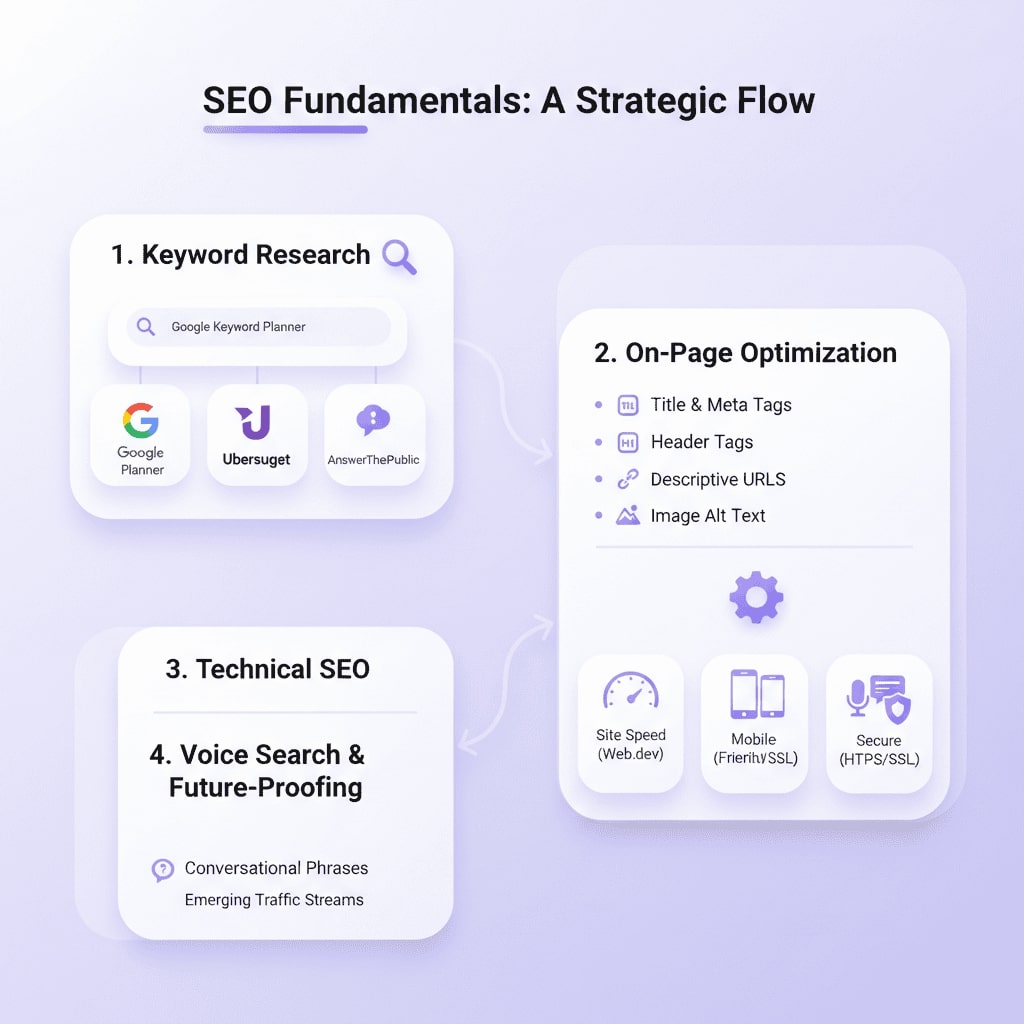
Start by listing terms your customers would type. Use free tools like Google’s Keyword Planner or Ubersuggest to gauge search volume and competition. For a structured approach, refer to Ahrefs’ comprehensive keyword research guide.
Include:
- Short-tail (e.g., “plumber near me”)
- Long-tail (e.g., “custom birthday cakes in Valencia Bukidnon”) for highly targeted traffic
Tools for Research
- Google Keyword Planner, available through Google Ads
- Ubersuggest by Neil Patel
- AnswerThePublic real-time query insights
On-Page Optimization: Signals That Matter
On-page SEO ensures each page clearly communicates its topic to search engines and users.
- Title tags and meta descriptions should contain your main keyword—see Moz’s on-page SEO guide for best practices.
- Header tags (H1, H2) organize your content logically, improving readability.
- URLs need to be descriptive and short (e.g., /custom-cakes-bukidnon).
- Optimize images with descriptive filenames and alt text to boost accessibility and keyword relevance.
Technical SEO: Building a Solid Foundation
Behind-the-scenes factors like site speed, mobile friendliness, and secure connections all influence rankings.
- Use Web.dev’s site speed assessment, like PageSpeed Insights, to identify slow pages and follow actionable recommendations.
- Ensure your site is mobile-responsive—refer to Google’s mobile-first indexing documentation to understand why mobile usability is critical.
- Implement HTTPS for secure browsing; organizations like Let’s Encrypt offer free SSL/TLS certificates.
Voice Search and Future-Proofing
With over 25% of US adults using voice assistants weekly, optimizing for conversational phrases (e.g., “Where can I find a family dentist nearby?”) can capture emerging traffic streams.
Content Strategy: Creating Value That Ranks
Deliver answers, guides, and stories that address real concerns.
- Publish blog posts targeting long-tail keywords to capture specific search intent.
- Add FAQ sections to aim for “People Also Ask” features on search result pages.
- Share detailed case studies to demonstrate your expertise and build trust.
Try writing articles for long-tail keywords — they’re less competitive and bring visitors who are ready to buy.
Example:
Instead of writing about “dentist services,” write:
“Affordable braces for teens in Malaybalay Bukidnon.”
This is where working with an SEO Specialist in Bukidnon can be helpful — they understand what locals actually search for.
Link Building and Off-Page SEO: Earning Authority
Backlinks from reputable sites signal reliability and authority to search engines.
- Reach out to local news outlets for interviews or features that link back to your site.
- Guest post on respected industry blogs to tap into new audiences.
- Sponsor community events or professional associations and request a link on their websites.
Local SEO Essentials
Optimizing Your Google Business Profile
Filling out your profile is just the start. Regularly post updates, offers, and photos to show activity—and respond to every review to bolster local rankings and consumer trust, as outlined in Google Business Profile best practices.
Geo-Tagging and Local Visual Content
Embedding geo-coordinates in your website and social-media images helps search engines tie photos to your location. Refer to BrightLocal’s guide on local image optimization for implementation steps.
Hyper-Local Landing Pages
If you serve multiple neighborhoods, create a dedicated page for each area. Include local landmarks, client testimonials, embedded Google Maps, and even short videos featuring your team at community events. See SEMrush’s hyperlocal SEO guide for detailed examples.
The Citation Consistency Conundrum
Even tiny NAP (Name, Address, Phone) variations—like “St.” vs. “Street”—can confuse search engines. Audit and correct all directory listings regularly to keep your citations uniform, following Whitespark’s guide to citation consistency.
Community Engagement as an SEO Signal
Active involvement in local charities, sponsorships, or events generates organic mentions and links. Search engines regard these real-world signals as proof of your trustworthiness and authority, as discussed in HubSpot’s insights on community engagement for SEO.
Measuring Your SEO Performance
Track rankings, traffic, and user behavior with:
- Google Analytics for traffic sources, bounce rates, and conversion tracking
- Google Search Console for index coverage, query insights, and technical issue monitoring
Both tools are free and crucial for refining your approach.
Final Thoughts
SEO isn’t about hacking Google — it’s about understanding customers and creating a great experience online. When your business is easy to find, easy to understand, and easy to trust, customers naturally choose you.
Be patient. Be consistent. Every improvement compounds over time.
And yes — your business can compete and win, even against bigger brands.